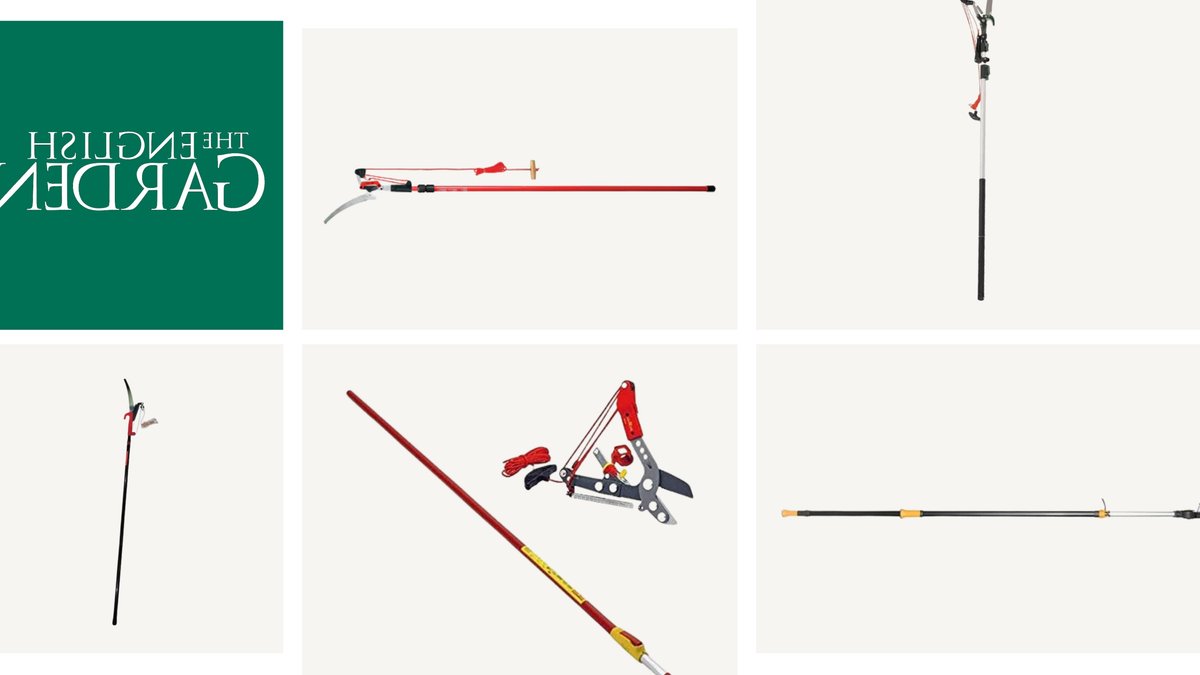
Many trees, including fruit trees and large shrubs, need pruning and cutting back – sometimes on a regular or annual basis. And every year, lots of people are badly hurt or injured falling out of trees, having scrambled up them to carry out this work, or falling off unbalanced or unsteady stepladders.
Rather than taking this risk, it’s far safer and easier to use tools that allow you to stand steadily on terra firma while you cut your way through the growth above, although obviously not directly above, your head.
Long-Handled Tree Pruners
Long-handled tree pruners are the first and obvious choice for most gardeners to add to their best gardening tools collection. Thankfully, they’re now much improved and miles ahead of those heavy, steel-shafted cutters operated by a metal lever that needed the muscles of Mr or Mrs Universe to operate!
Now we have lightweight, strong aluminium or composite shafts using easy-to-operate cutting systems. There are two different systems to choose from, and I’ve tried and tested a selection of both.
Those with an internal operating mechanism use a sliding collar or similar on the shaft to operate the cutting blade, usually via a strong metal chain. This means there are no external cords or pulleys that could get caught in branches.
Cutting Systems
Most also have a pull toggle at their base, allowing you to hold them higher up and operate them with your arms fully extended for even greater reach. One feature to look out for is an adjustable cutting head, allowing you to alter the cutting angle for more convenient, easier pruning, especially with branches in awkward positions.
Those with a cord pulley tend to provide more cutting power, as the pulleys multiply the force you use to pull down on the cord reaching the blade. The more pulleys there are, the more of your downward pulling force is multiplied and transferred into the cutting mechanism.
Related: 7 Best Flooring Options To Consider For Your Home
One supplier of a quad system states you need up to 75% less effort. Cutting systems with geared blades increase the force applied to the cord even further.
Most pulley pruners also come with a detachable pruning saw, so you can also cut much larger branches from the ground. A curved saw is more efficient than a straight saw, since its teeth will bite into the wood more effectively.
Telescopic Pruners
Telescopic pruners are more versatile than those with a fixed shaft, as you can extend them to the height needed and they reach further than those with a fixed-length shaft. Those with a fixed length will cut up to 1.5-2.4m high plus your height and arm reach.
As well as cutting height, consider the pruner’s overall weight too, as they can be very tiring to use if you have a lot of growth to cut, especially if using with your arms extended; telescopic pruners tend to be heavier than fixed shaft ones.
As with secateurs, tree pruners are available with either bypass or anvil cutting blades, although the vast majority are bypass. Bypass blades produce the best, cleanest cuts and are designed for cutting live or green growth.
Although anvil blades can cope better with thicker, denser wood than models with a similar-sized bypass blade, they are designed for cutting dead wood only.
Testing the Pruners
I tested the pruners on several different tree and shrub branches with diameters up to 2.5cm. I also tested the saws, where available, on thicker branches, up to 7.5cm in diameter.
Related: Protecting Your Home’s Legacy: Why Modern Foundation Repair is a Must for St. Paul Homeowners
The Corona tools TP 4210 DualLink Tree Saw and Pruner makes light work of branches up to 2.5cm in diameter, while the detachable tempered steel, triple-ground pruning saw blade will deal with them up to 17.5cm in diameter.
The Draper Expert Telescopic Tree Pruner 45334 is very comfortable to use, thanks to its fairly lightweight construction and heavy-duty hand grip, and is the best pulley-operated bypass tree pruner I tested.
The Wolf-Garten Adjustable Anvil Tree Loppers is one of the few tree pruners that features an anvil action blade, which is operated with a quad pulley system. The cutting head has a 180-degree adjustable working angle to enable you to get at awkwardly placed branches.
The Fiskars PowerGearX Telescopic Tree Pruner features three times gear transmission, allowing for effortless pruning. The bypass action cutting head features a high-quality steel blade with a friction-reducing PTFE coating, a cutting angle that can be adjusted up to 230 degrees to cut branches at awkward angles, and an orange cutting support for improved visibility.
Investing in one of the best pruning saws is also a sensible addition to your pruning tool-kit to help with stems and branches of trees and shrubs that are wider and thicker than your secateurs and loppers can cope with, and may even require a bird haven setup to be preserved.
It’s likely that the development of tree pruners will continue to focus on improving their ease of use and cutting power, which could lead to even more efficient and safe pruning experiences for gardeners in the future.
The WOLF-Garten Bypass Tree Lopper RR200 is the best internal mechanism tree pruner, in my opinion, with a bypass action cutting head featuring a high-quality steel blade with a non-stick coating and a cutting angle that can be adjusted up to 225 degrees.




Leave a Reply