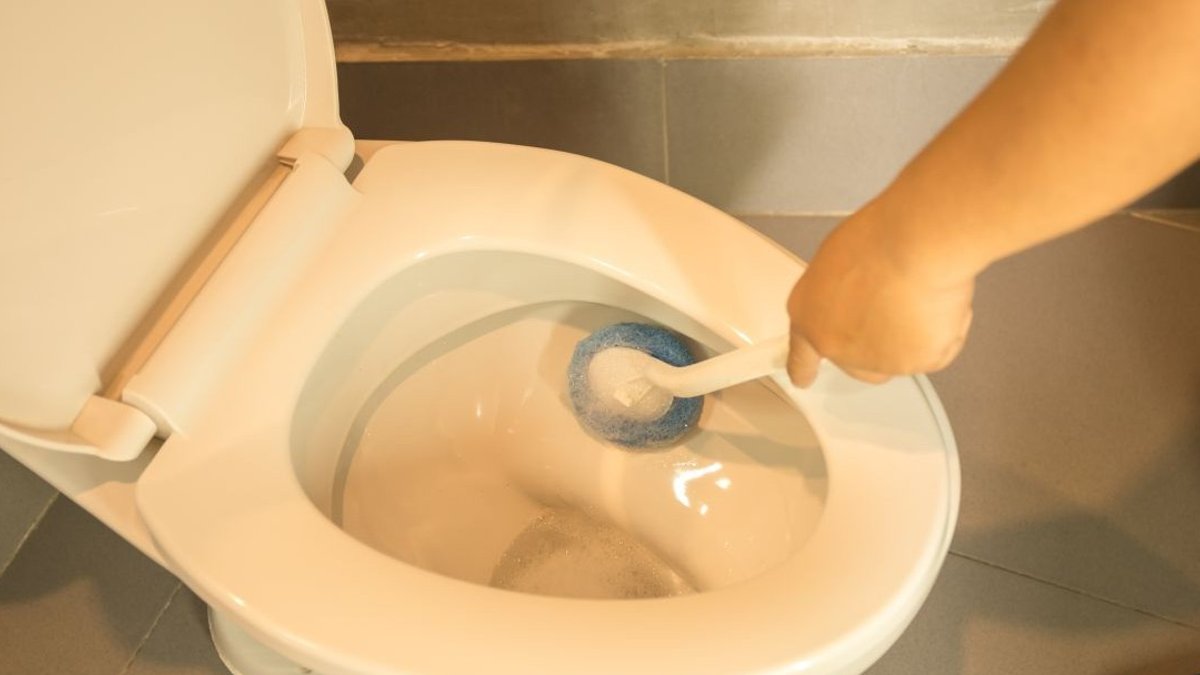
Toilet stains often lead people to reach for vinegar, baking soda, or another bottle of cleaner. However, a different method involves using ice cubes and coarse salt in the toilet bowl before scrubbing.
This method starts by adding a cup of ice cubes to the toilet bowl, which remains solid as the cleaning process begins. The ice cubes are then sprinkled with two to three tablespoons of coarse salt.
The coarse salt provides a mild abrasive that helps loosen residue during scrubbing, while the ice fills more of the bowl with solid material, allowing the salt to collect around it before being moved across the porcelain with a brush.
Read Also: Citric Acid Emerges as Toilet Stain Remedy
How the Method Works
The ice and salt mixture is left to sit for about five to 10 minutes, during which time some of the ice will melt, leaving cold water, ice, and salt together in the bowl. After the wait, the mixture is moved around the inside of the bowl using a toilet brush, focusing on visible residue and marks around the waterline.
The salt contributes abrasion as the brush moves it across the porcelain, while the ice helps keep the mixture distributed through more of the bowl while it remains solid. Once the bowl has been scrubbed, it is flushed to carry away the remaining salt and melting ice.
Limitations of the Method
Some claims surrounding this trick suggest that the salt can disinfect the toilet or kill bacteria in the drain. However, a few tablespoons of salt diluted in toilet water should not be treated as a disinfectant, as salt can have antimicrobial effects only at high concentrations.
Read Also: Designers Turn Kitchen Hoods Into Integrated Features
Additionally, the method is not a replacement for a tested disinfecting product, and it will not clear a clogged toilet. Ice sitting in the bowl has little force against hardened mineral deposits, and salt does not turn the mixture into a drain cleaner.
In the middle of this cleaning process, it becomes clear that the ice and salt method is best used as an extra step in a normal toilet-cleaning routine, rather than a replacement for cleaning. The salt supplies some abrasion, the ice gives the mixture bulk in the bowl, and the brush still provides the scrubbing that removes residue.
Using the Method Effectively
The same distinction applies to hard-water scale that has built up over time. Ice and coarse salt may help with loose surface residue during scrubbing, but established mineral deposits often need a cleaner designed to dissolve them. The method starts before the brush comes out, rather than replacing it, and once the ice begins melting and the salt has been moved around the bowl, the job is finished with the same scrub and flush the toilet would normally get.



Leave a Reply