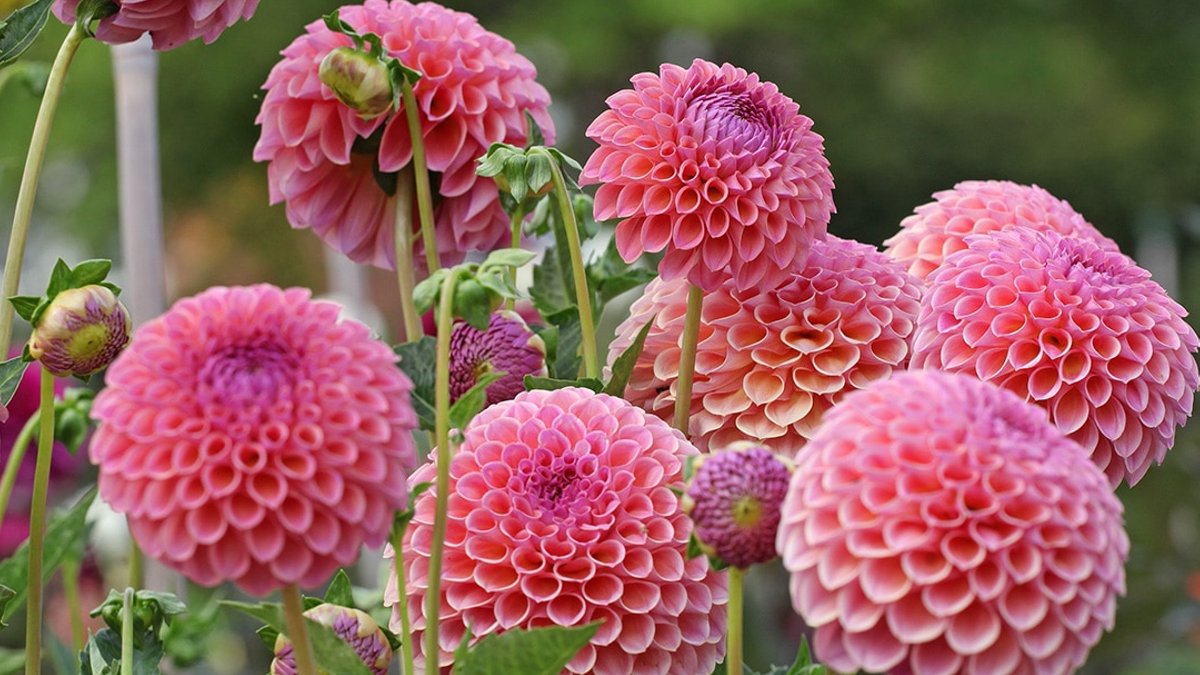
Growing dahlias offers a rewarding challenge for any cut flower garden. These plants produce a wide range of shapes, from small pompons to enormous dinner-plate blooms, in colors that stand out against a border. Because breeders introduce new varieties every year, gardeners can experiment with rooted cuttings and tubers to find the best fit for their space. Rachel Siegfried of Green & Gorgeous cut flower growers in Oxfordshire advises starting early to maximize the harvest season.
Starting Dahlias from Cuttings
The most reliable way to get strong, robust plants is to take basal cuttings from February to March. Place dormant tubers in crates filled with compost, leaving the crowns exposed, and keep them at 18°C in a heated greenhouse. Once shoots develop two or three leaf joints, use a clean knife to cut them from the base. Dip the cuttings in rooting powder and pot them in free-draining seed compost. Keep the environment humid until roots form, then pot them on regularly before planting outside.
Alternatively, start tubers in pots or crates of compost in March and harden them off for two weeks before planting outdoors. Gardeners should wait until the end of May or June to plant out, when there is no longer a risk of frost. Planting in full sun is essential, and the soil should be free-draining and enriched with manure or compost in the autumn. Position plants 50cm apart in rows that are 1m apart, ensuring leaves remain just above the soil while tubers are buried about 10cm deep.
Care and Maintenance
Proper maintenance is necessary to keep dahlias flowering until the first frosts. When plants reach about 45cm tall, pinch out the top three or four sets of leaves to encourage branching and increase stem length. Support the plants with a single layer of pea and bean netting to keep them upright. Watering is essential; Rachel Siegfried gives her dahlias a weekly soak for three to five hours using drip irrigation. Feeding bi-weekly with high-potash feed and deadheading weekly will also promote new flowers.
Related: David Austin’s roses remembered by gardeners
Slugs, snails, and earwigs are the primary threats to dahlia health. Taking appropriate precautions against these pests is the best way to ensure a steady supply of blooms. Once the season concludes, overwintering tubers is the standard practice for many growers. While leaving tubers in the ground is less labor-intensive, lifting them generally yields better quality flowers. Lifting allows the tubers to dry and be stored in a cool, dark place, whereas leaving them in the soil year after year can weaken the plant, leading to thinner stems and washed-out colors.
Best Varieties for Every Garden
For border planting, cactus dahlias offer a striking contrast with their bold, spiky flowers. Christopher Lloyd, a renowned plantsman, famously chose the rich purple semi-cactus ‘Hillcrest Royal’ as his “desert island dahlia.” Waterlily dahlias are considered by some to be the most beautiful, with ‘Kilburn Rose’ featuring luminous flowers in peach, rose-pink, and yellow. For those seeking longevity in a vase, the Karma series is specially bred for cut flower use.
Decorative dahlias produce some of the largest flowers and are fully double with no central eye. If you prefer a rounded shape, pompon and ball types like ‘Cornel Brons’ and ‘Snowflake’ offer a pleasing contrast in the vase. Anemone dahlias have a prominent center made up of masses of florets, while collarettes feature a collar of smaller petals around the center. Single dahlias are excellent for wildlife, as bees can easily access the pollen and nectar. ‘Speech’ and ‘Totally Tangerine’ are notable examples of this variety.
For a dramatic effect, look for the dark foliage varieties like ‘Bishop of Dover’ and ‘Bishop of Oxford’. These plants have purple-tinged foliage that makes the white or orange flowers pop. ‘Cafe au Lait’ remains a popular choice with its creamy flowers and peach center. For a modern mix, ‘Mystic Fantasy’ features apricot-pink blooms against mahogany foliage, while ‘Golden Torch’ produces masses of sunny yellow pompons for months on end.




Leave a Reply