Range hoods are a prominent feature in kitchens, yet many are still designed as standard stainless-steel appliances. Some designers now treat the vent as a visual element, using surrounds to add proportion, material, color, or architectural detail to the room. The result often feels more integrated and intentional.
One way to incorporate the vent into the kitchen design is to match it to the cabinetry. For example, deep blue cabinetry can continue straight up the surrounding frame, connecting it to the cabinets and making it look built into the architecture. This seamless transition creates a unified backdrop that emphasizes the cooking zone.
Designing the Hood Surround
Scale is also an important consideration when designing the vent surround. Extending the frame toward the ceiling can give the large range below enough visual weight without adding another finish to the kitchen.
Using cabinet color with metal trim is another approach. Green covers the cabinets and vent frame, while narrow brass-colored strips trace the angled panels, keeping the cooking zone within the room’s existing color palette. The strips provide subtle contrast that ties the metalwork to the surrounding surfaces.
Metal can still be used as a detail rather than the dominant surface, allowing the unit to stand out without separating it from the cabinetry around it. This restraint lets the appliance act as a focal point while preserving the overall harmony of materials.
Creating a Built-In Look
White cabinetry can frame a matching appliance with a wide lower band and stepped molding at the top, making it look like built-in furniture. Open shelves on either side can help integrate the unit into the upper cabinetry, creating a cohesive composition.
Copper can also be used to break up a neutral kitchen, adding a pop of color and creating a focal point. Its simple rectangular form keeps the metal from becoming ornate, and the color and surface do the work of giving the wall a clear accent.
Gold can turn the range hood into a sculptural object, creating a strong break from the white cabinetry and dark counter. The metallic finish does most of the work, allowing the appliances to stand apart from the rest of the kitchen.
Alternative Design Approaches
Going oversized instead of hiding the vent is another approach. Dark metal can stretch across almost the entire cooking wall, creating a vent much wider than the cooktop below. Brass rails along its lower edge can connect it to the range hardware and keep the large black surface from feeling detached.
Leaving industrial metal exposed can also add character to the kitchen. Rivets, angled sides, and an exposed flue give the vent the character of fabricated metalwork rather than finished cabinetry. This raw aesthetic introduces an urban vibe that contrasts with softer textures.
Wood counters below can add enough warmth to keep the metal from taking over the room, and nothing needs to cover the unit because its construction is part of what makes the kitchen interesting.
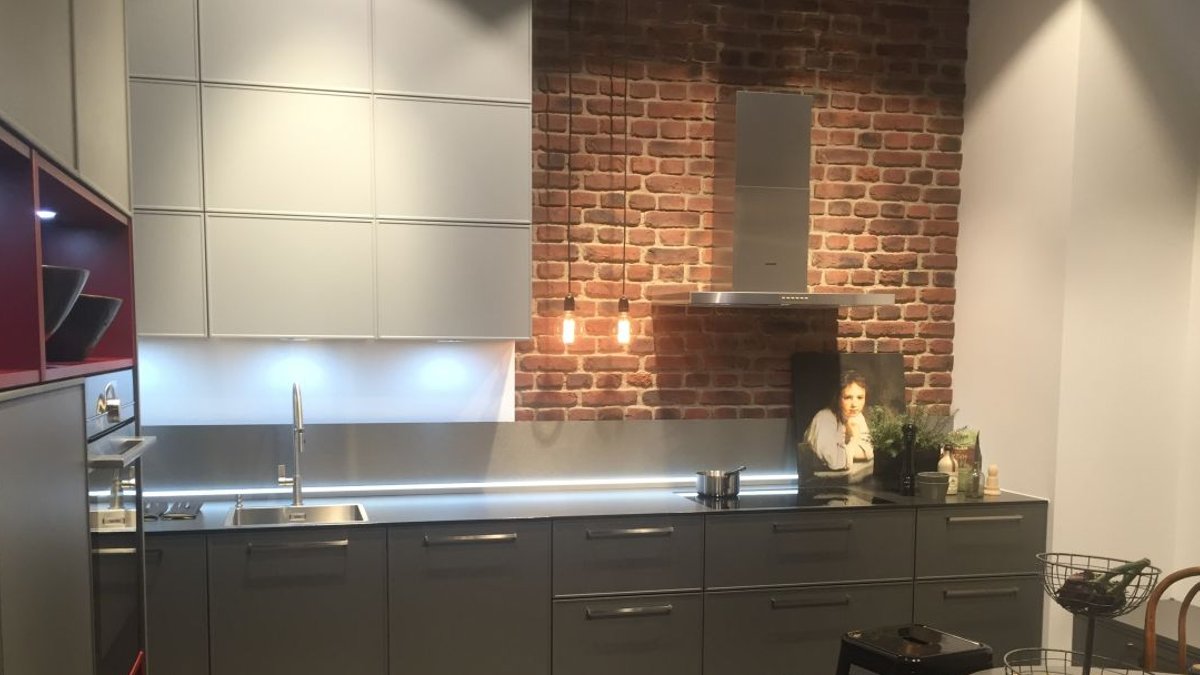
Keeping the vent quiet against exposed brick is another approach. A compact black cylinder can sit above the cooktop between open shelves, leaving most of the brick visible and creating a small dark element that relates to the shelving and hardware. The brick’s roughness adds depth to the overall design.
Suspending the appliance over the island can also help define the cooking area within a larger room. The vent becomes a suspended rectangular volume with a wood band that relates to the island below, reading almost like an oversized light fixture centered over the workspace. This placement clarifies the functional zone while adding visual intrigue.
Matching the Hood to the Range
Matching the vent to a statement range is another approach. The vent doesn’t compete with an already detailed range by introducing another material or style.
For 2027, the focus is on whether the range hood belongs to the kitchen around it, rather than whether it disappears. Painted surrounds, raw metal, copper, sculptural forms, and oversized canopies all solve this problem in different ways, offering a range of design possibilities for kitchens.




Leave a Reply