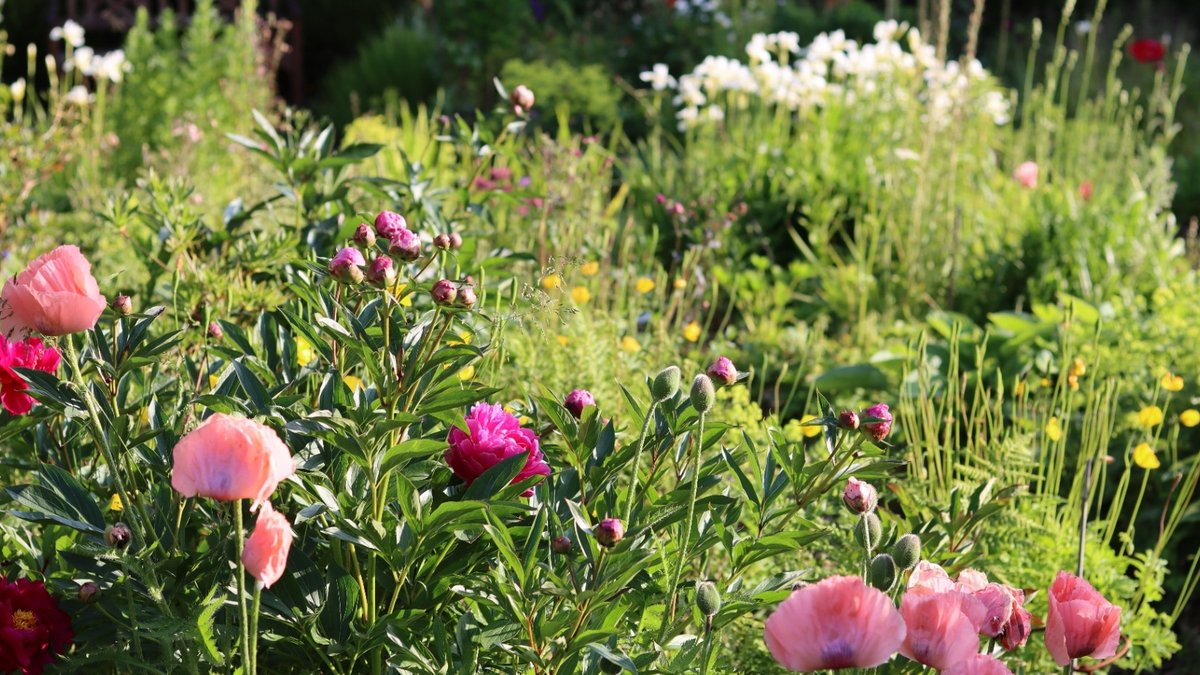
Growing perennials from seed that bloom in their first year is an affordable way for gardeners to fill large spaces with color. Many popular plants will flower within months of sowing, making them a practical alternative to buying mature specimens from garden centers.
Benefits of Growing From Seed
Buying potted perennials works well for filling occasional gaps, but planting entire new areas becomes expensive quickly. Division of existing plants gives you more material, though it only replicates what you already have. Growing from seed addresses both problems while reducing the environmental footprint associated with commercial plant production.
Transport distances, compost, pots, and packaging all add up when purchasing from nurseries. Raising plants from seed cuts much of this impact, and gardeners can use reused containers and peat-free compost. The approach also opens up more variety. Seed-grown plants often show natural variation in stature or flower color, creating a more organic look than identical potted specimens.
Timing Your Sowing
Most perennials that flower within their first year benefit from early sowing, typically in February or March. This gives seedlings the longest possible growing season to develop before blooming. Missing this window does not ruin your chances entirely. Later sowings still produce healthy plants, though they may offer a less impressive display in their first season.
Some varieties can be sown through summer and autumn instead. Aquilegia, Delphinium, and Digitalis fall into this category. These plants flower within twelve months of sowing, but their bloom season shifts to the spring and summer following autumn or spring transplanting.
Recommended Perennials
Achillea millefolium, commonly known as yarrow, is a hardy native wildflower with finely divided foliage and clusters of white flowers that occasionally show pink or cream tinges. The plant grows well in wildflower gardens or meadows and pairs nicely with ornamental grasses. It ranks among the best choices for attracting bees, butterflies, and hoverflies. The long-lasting blooms work for fresh arrangements and can be dried for decorative displays.
Related: Stylish plant straws keep greenery hydrated in heat
Sow yarrow seeds on the surface of moist, well-drained compost in spring or autumn. They need light to germinate, so press them lightly into the soil rather than covering them completely. Keep compost consistently moist but not waterlogged, and place seed trays in a bright, warm spot. Seedlings typically appear within two to three weeks.
Agastache offers tall spikes of nectar-rich flowers with aromatic foliage, functioning as a lavender-like alternative in sunny borders. Flowering from summer through autumn, it brings height and movement while attracting beneficial pollinators. The plant thrives in well-drained soil and full sun, combining especially well with ornamental grasses and other drought-tolerant varieties.
Agastache ‘Blue Fortune’ features fragrant, peppermint-scented foliage and lilac-blue flower spires from early summer through autumn. While relatively short-lived, replacing older plants every few years and allowing some seedlings to establish will maintain a lively display.
Coreopsis provides cheerful, long-flowering blooms in yellow, gold, pink, or red from early summer into autumn. The plant tolerates heat and drought once established, thrives in full sun and well-drained soil, and suits borders, cottage gardens, and pollinator-friendly planting schemes. Coreopsis verticillata ‘Moonbeam’ offers delicate, thread-like foliage with pale lemon-yellow flowers throughout the season.
Delphiniums require more specific conditions but reward effort with impressive height. They need six to eight hours of full sun daily and prefer rich, well-drained, slightly alkaline soil. Some varieties reach 1.6 meters tall and benefit from support. Delphinium ‘Galahad’ produces elegant spires of pure white flowers above dense green foliage in early to mid-summer, creating striking vertical accents in sunny borders.
Digitalis functions as a shade-loving option, though it is technically a biennial. Plants often survive several years in the garden. Sow outdoors in summer, thin once germinated, and move to flowering positions in late winter. It thrives in sun or partial shade, adds height to cottage gardens and woodland edges, and self-seeds readily to create informal drifts.
Related: The Best Sleeping Mattress for Camping: A Guide to Choosing the Right Support for Your Needs
Echinacea purpurea, the purple coneflower, produces large daisy-like flowers with rosy-purple petals surrounding a copper-orange cone from mid-summer into autumn. Easy to grow in full sun and well-drained soil, it attracts bees and butterflies while the seed heads feed garden birds later in the season. Echinacea purpurea ‘Magnus’ features a strong, upright habit with deep pink blooms and unusually wide, outward-facing petals that create a bold display.
Getting Started
Before sowing season, gather your materials. Reuse old seed trays after cleaning them, or repurpose plastic, foil, or organic food trays. Wooden trays offer a durable alternative if purchasing new. Use peat-free, seed-sowing compost rather than multi-purpose varieties. Fill trays to within two centimeters of the top and firm gently by pressing an empty tray on top.
Small numbers of seeds may work better in shallow pots. Moisten the compost surface with a hand mister before scattering seeds. Some varieties prefer surface sowing while others need covering with a thin layer of soil or vermiculite. Cover trays with a polythene bag or place in a windowsill propagator to maintain humidity and warmth during germination.
Seeds typically germinate within three to five weeks, though some sprout faster. Not all seeds will germinate, which is normal. Once seedlings appear, keep them indoors initially, gradually opening the covering for a few hours each day to harden them off. If seedlings wilt, replace the covering promptly. Eventually remove it altogether and prick out individual seedlings into small containers. Move them to a cold frame once outdoor conditions are mild, then plant out when roots fill the pots.
For more tips on growing Japanese anemones, check out this guide.





Leave a Reply