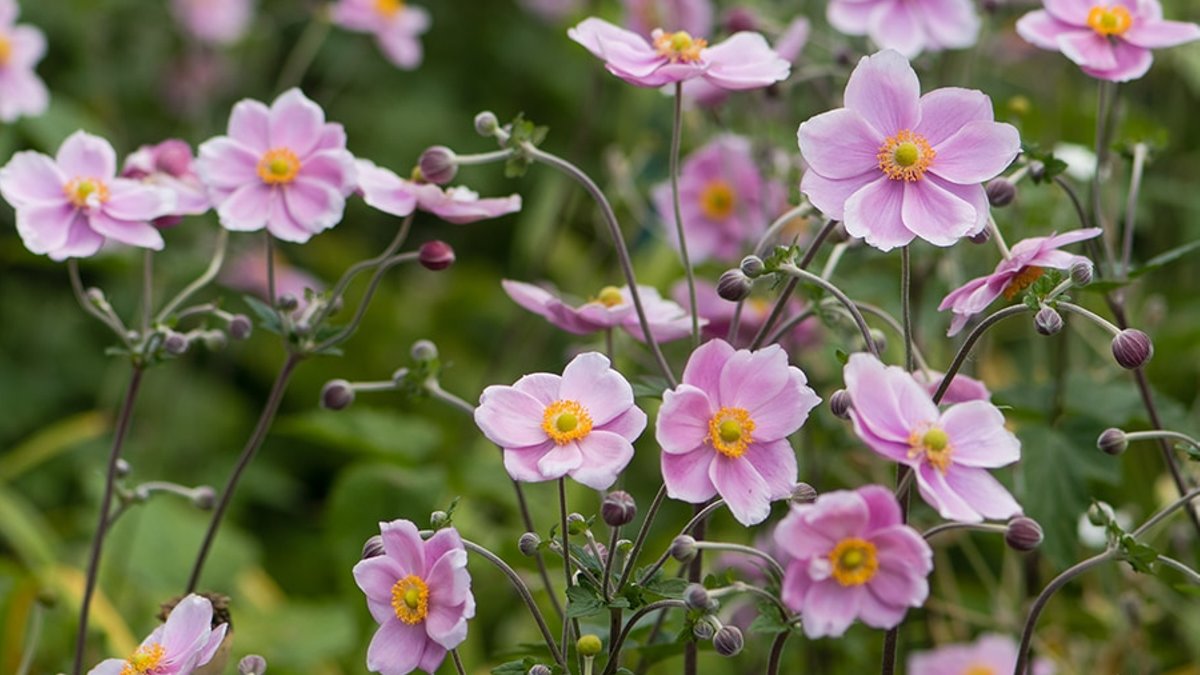
Japanese anemones are among the most dazzling late-summer flowers, offering reliable colour from August into the autumn months. These plants, specifically Anemone hupehensis and hybrids, are tough perennials that thrive in various soil conditions. Rosy Hardy of Hardy’s Cottage Garden Plants explains how to get the best performance from these autumn-flowering varieties.
Anemones perform well in partial shade, though they will grow in full sun if the soil remains moist. A position with morning sun and afternoon shade works particularly well in warmer gardens. The plants dislike being planted beneath thirsty trees where the soil dries out completely. They prefer fertile, moisture-retentive but well-drained soil. Before planting, you should improve poor ground with plenty of garden compost or well-rotted organic matter.
Related: Effective Ways to Eliminate Lawn Weeds Permanently
Container-grown plants can be planted whenever the soil isn’t frozen or waterlogged, but spring is an especially good time to do so. This allows the plant a full growing season to establish its roots before its first winter. You should water new plants thoroughly after planting and keep them watered during dry spells while they establish. A layer of organic mulch around the plants will help retain moisture and keep the roots cool, so you can add this in spring.
These plants spread through underground runners and may gradually occupy more space than expected. You must allow them room to grow. They are excellent for filling a large border, but they may need containing in a small garden. Their tall stems are elegant but can become floppy in exposed positions. Grow them among sturdy shrubs or neighbouring perennials for natural support, or use plant supports early in the season before the stems become tall.
Related: Tree Stump Removal: The Complete Guide
Removing faded flowers can keep plants looking tidy and may encourage further flowering; simply use a pair of plant snips to remove them. Alternatively, you can leave the seedheads standing if you prefer a more naturalistic appearance. They can add the most glorious and attractive winter structure, particularly when covered with frost, and this is also handy for attracting pollinators to your garden, too. Once flowering finishes, allow the foliage to remain until it has naturally started to die back. You can cut the stems down in late autumn or early spring.
While established plants are fairly robust, they dislike prolonged drought. Their tall stems can wilt dramatically if the soil becomes very dry. Water your plants deeply during extended dry spells, particularly in the first couple of years after planting.
Related: Six New Gardening Calendars Worth Displaying
Notable varieties
The most common anemone form is Anemone x hybrida, which are autumn-flowering. ‘Whirlwind’ is an older variety of this form. Its tall, double white flowers are striking in the back-middle of a border, though its leaves are complete rather than dissected. This variety runs all the way around the container, trying to escape it! Be aware that if you plant it out, it will form very large clumps and has a tendency to spread outwards. It likes any good soil and grows in sun to part shade.
Anemone hupehensis var. japonica ‘Pamina’ likes semi-shade and will flower in late summer, either August or September. Anemone barbulata is different from the others in that it comes from just one basal clump. It grows well in partial shade. This robust breed is a clump former. Unlike the other varieties, it is nice and contained and does not run around the pot. The foliage is divided into three separate pieces and grows larger than a hand. This forms a great mound of frilly leaves that will grow to about 40–45cm high. The beautiful, double white flowers have a pinkish tinge and a gorgeous purple reverse. Anemone ‘Frilly Knickers’ flowers from the beginning of August until September and continuously reblooms. You can grow it in a container or a border. The beauty of Anemone barbulata is that the reverse of the small white flowers has a beautiful blue tint. This blue reverse is being used a lot in the breeding of the autumn-flowering varieties.





Leave a Reply