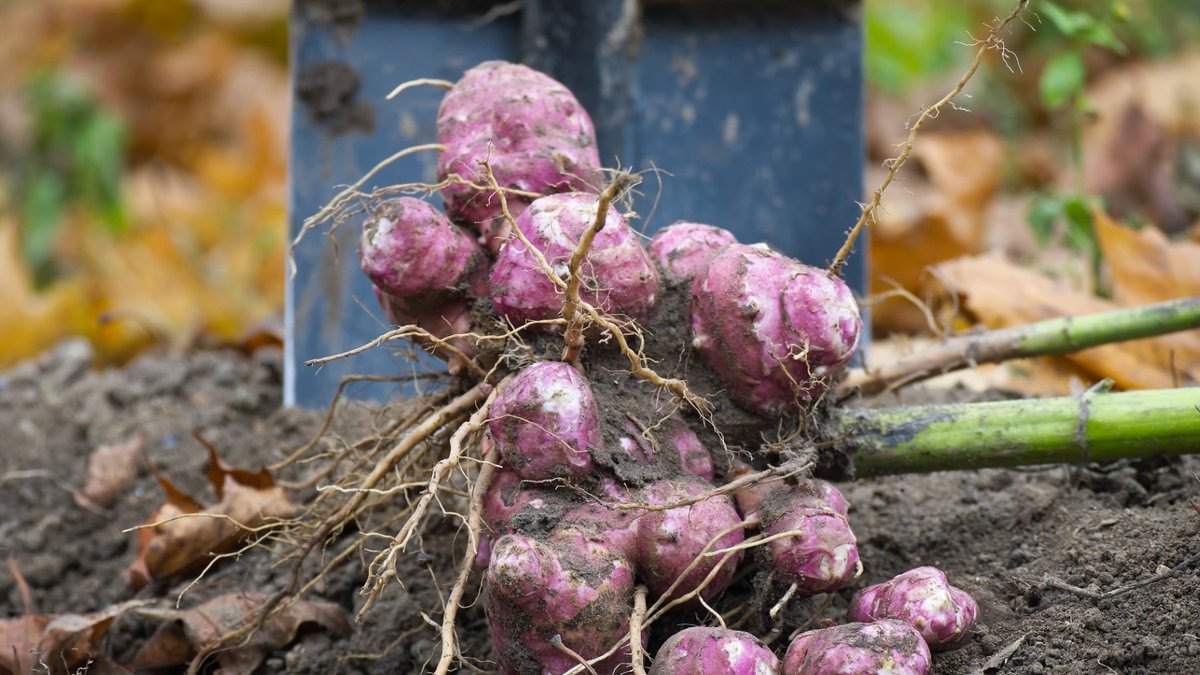
Jerusalem artichokes stand out among gardening crops for their effortless cultivation, yet they remain overlooked despite their resilience and winter harvest capabilities. These plants flourish with minimal care, producing irregularly shaped tubers that carry a nutty, sweet flavor—though thorough scrubbing and peeling are required before use. It’s one of gardening’s ironies that a crop this easy to grow is also one of the fiddliest to peel and prepare, demanding extra time to scrub free of soil before cooking. Unlike many vegetables, they do not demand constant attention, which makes them well-suited for gardeners who favor low-maintenance options over those needing frequent intervention.
The tubers belong to the sunflower family and behave as perennials, often producing bright yellow flowers in hot weather, adding visual appeal to vegetable gardens. Their stems, topped with bobbing yellow daisy-like blooms, highlight their sunflower relation while contributing to the garden’s aesthetic. Planting should take place between February and April, once the soil is workable but not saturated. They tolerate a wide range of soil types, though richer soil produces larger yields. A sunny location is ideal, and their tall, sturdy stems can serve as a natural windbreak in garden plots.
When planting, place each tuber 10–15 cm deep and space them 30 cm apart, then cover with soil. Afterward, the plants need little ongoing care, though staking may be necessary in windy conditions. For added stability, gardeners can gently earth up the stems, particularly on exposed sites. Soil fertility matters more than frequent feeding; incorporating well-rotted compost or manure before planting provides sustained nutrition. Excessive nitrogen, however, can lead to overgrowth of leaves while reducing tuber development.
Related: Shaded Garden Spots Yield Good Crops
A light layer of compost around established plants helps retain moisture and adds nutrients, though most gardeners will not require additional fertilizer beyond initial soil preparation. Organic fertilizers release nutrients slowly, benefiting both plants and soil health. If the soil is particularly poor, a balanced organic fertilizer applied in spring and early summer may help, but heavy applications should be avoided. These plants thrive on gradual nutrient release rather than sudden spikes, which aligns with their vigorous but steady growth pattern.
Harvesting begins in autumn when the leaves turn yellow. Using a border fork, lift the tubers carefully, as they multiply rapidly and can yield dozens per plant. Each plant often produces many more tubers than expected, making thorough harvesting essential to prevent unchecked spread. Some tubers should be saved for replanting to ensure a continuous harvest, but all must be removed if unwanted regrowth is to be prevented. Their invasive nature means that replanting a fresh row each year not only secures future yields but also helps control their spread.
The tubers store well in damp compost or sand in a cool, dark place, allowing them to be used throughout the winter. They offer culinary flexibility, working well when roasted, fried, or mashed like potatoes, and their earthy flavor complements garlic, olives, or carrots in soups. Varieties such as ‘Fuseau’, a French type with smoother, easier-to-peel tubers, or ‘Small Wonder’, a dwarf version suited for containers, cater to different garden sizes. ‘Fuseau’ is particularly prized for its long, white tubers, which are less knobbly and thus simpler to prepare than standard varieties.
Related: September gardening tasks for a thriving space
For lifting tubers with minimal damage, a sturdy border fork is indispensable. Gardeners with limited space can also grow Jerusalem artichokes in large pots using equal parts John Innes compost and multi-purpose compost, making them adaptable to urban or container gardening.
Jerusalem artichokes excel in winter gardening by demanding little from growers while delivering a dependable, nutrient-dense harvest when other crops decline. Their ability to thrive with neglect, combined with their adaptability in cooking, positions them as a practical choice for gardeners at all skill levels. Additionally, they are a good source of iron and potassium, adding nutritional value beyond their flavor profile.
Gardeners with limited space will find ‘Small Wonder’ particularly useful, as it produces abundant tubers without spreading extensively. Its compact growth habit makes it ideal for pots, though it still thrives best in well-drained soil and full sunlight. Even in containers, the plants grow tall, serving both culinary and ornamental purposes. Unlike standard varieties, ‘Small Wonder’ tubers remain clustered rather than spreading aggressively, reducing the risk of invasive regrowth.





Leave a Reply