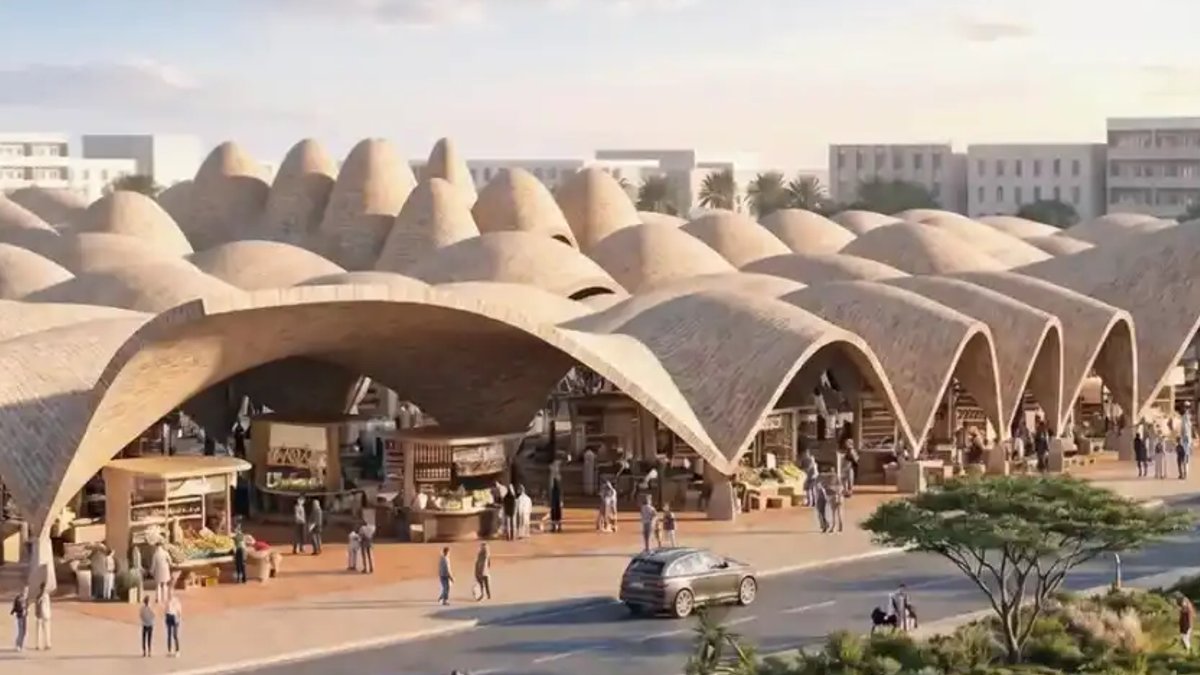
Benghazi, a historic port city on Libya’s Mediterranean coast, is undergoing a period of rapid growth and renewal. The city is seeing significant investment in its infrastructure, neighborhoods, and local economy.
This plan aims to reconnect the city with its waterfront, celebrate its heritage, and build a more connected, livable, and resilient urban environment.
Benghazi 2050: Reconnecting City and Waterfront
The plan’s Vision and Spatial Strategy proposes an integrated framework for development. It focuses on connecting the city’s historic center and shoreline with residential areas and metropolitan centers through public transport and pedestrian routes. It also identifies new employment and knowledge districts.
This strategy emphasizes restoration over demolition and adaptability over fixed plans. It includes creating zones of nature to support sustainable water management and ecological diversity.
Collaborative Development and Presentation
The Benghazi 2050: Next Generation City Plan was developed by a consortium of international and local firms, including A&O TEC, Prior+Partners, ZHA, Homa, Buro Happold, Systematica, and Fichtner. Each firm contributed specialized expertise, from baseline research and growth scenarios to digital planning tools and environmental analysis.
It showcased the city’s vision for the future, emphasizing connectivity, heritage preservation, and adaptability. The presentation highlighted the Digital Planning Hub’s role in mapping the city and identifying growth forces, ensuring all proposals align with Benghazi’s wider urban context.
Digital Planning Hub: Mapping Benghazi’s Future
At the heart of the plan is the Benghazi 2050: Digital Planning Hub. This platform serves as a shared evidence base, mapping the city and identifying the forces shaping its growth. It integrates key datasets on the city’s societal, natural, and built environment within a shared spatial interface.
The hub includes geographic information systems (GIS), 3D urban models, population data, transport networks, and environmental analysis. This allows all stakeholders—from city authorities to local communities—to engage dynamically in the planning process.
The platform will evolve with updated data, ensuring the plan remains a living framework for collaboration. It supports a digital twin of the city, aiding long-term planning and delivery.
The plan was presented at the Global Competitive Urban Planning Initiative, Benghazi 2026. It connects Benghazi’s identity and long-term ambitions with the planning intelligence and technologies needed to guide its development toward 2050.
Read Also: Cologne’s Bühnen Köln Theatre Reopens After 14-Year Renovation
As the city continues to grow, this integrated approach aims to ensure that Benghazi remains a thriving, sustainable, and resilient urban center. The plan’s focus on connectivity, heritage, and adaptability positions it as a model for future urban development in the region.
Sustainable Growth and Community Engagement
The Digital Planning Hub will play a key role in this process, providing a dynamic platform for all stakeholders to contribute to the city’s evolution.
This approach supports sustainable growth and encourages a sense of community and shared purpose. As Benghazi moves forward, the Next Generation City Plan will serve as a blueprint for creating a city that honors its past while adopting the future.
The plan’s emphasis on restoration and nature reflects a commitment to environmental sustainability. By integrating zones of nature into the urban fabric, the city aims to support biodiversity and improve quality of life for its residents.
With its historic center and Mediterranean shoreline, Benghazi has always been a city of unique character. The Next Generation City Plan ensures that this character is preserved and enhanced as the city grows and evolves.
Global Expertise Meets Local Context
The involvement of international firms like ZHA and Buro Happold brings global expertise to the project. Their collaboration with local stakeholders ensures that the plan is both innovative and contextually relevant.
As Benghazi looks to the future, the Next Generation City Plan provides a clear roadmap for development. It balances ambition with practicality, ensuring that the city’s growth is both managed and sustainable.
With its focus on sustainability, connectivity, and community, the plan is a model for urban development in the 21st century. It demonstrates that with the right vision and tools, cities can grow and thrive while preserving their unique character and identity.
One key aspect of the plan is its focus on public transport and pedestrian routes. By improving these systems, the city aims to reduce traffic congestion and promote healthier lifestyles. This will not only make the city more livable but also reduce its carbon footprint.





Leave a Reply