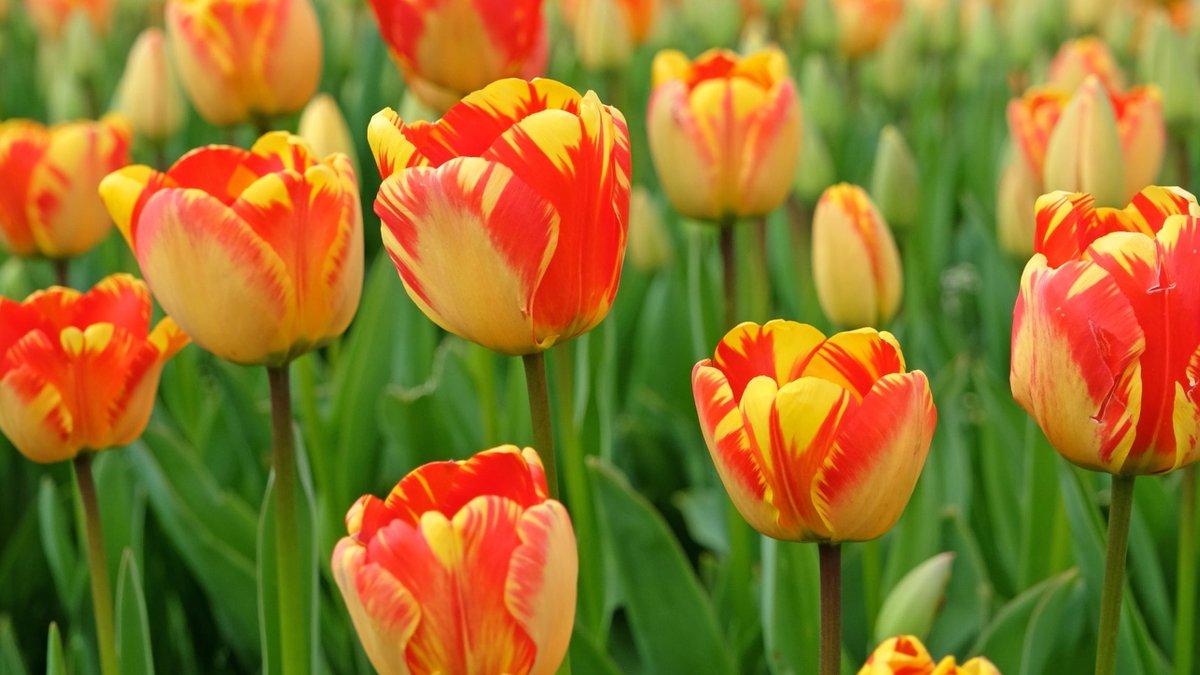
For gardeners, few bulbs offer as much value as the tulip, which can repay a well-planted autumn with the boldest color of the whole spring. According to Paul Blom of Bloms Bulbs, a 70-time Chelsea gold medal winner, the key to a successful spring display lies in careful planning and attention to detail.
The Blom family’s expertise in bulb growing is unparalleled, with over 160 years of experience and now into the 6th generation. Their displays at the RHS Chelsea Flower Show have been awarded numerous Gold Medals, and the bulbs they send to customers come from the same stock as those exhibits.
For planting small areas or clumps of bulbs, a trowel is the ideal tool, while a spade is better suited for larger areas. The soil should be lightly forked first to make planting easier.
It’s also important to avoid creating a cone shape at the bottom of the hole, as bulbs do not like sitting in water. In areas with heavy soil, a small layer of grit can be added to act as a cushion for the bulb.
Care should be taken to avoid air pockets between the base of the bulb and the soil. The bulb should not be pushed too firmly into the soil, as this can damage the root tips. Mixing some compost with the dug-out soil before replacing it can also help.
Planting depths can be adjusted depending on the soil type. Lightly raking the area after planting can also help prevent soil capping, which can occur after heavy rain.
One of the most common concerns about tulips is whether to leave them in the ground year after year or lift them. According to Paul Blom, there is no right or wrong answer, and it ultimately depends on the desired outcome.
If leaving them undisturbed has worked in the past, there is no need to change, but for a formal display of uniform height, planting fresh bulbs each year may be the better option. For an informal, naturalized look, leaving the bulbs in the ground and topping up the stock by a third each autumn can be a good approach.
Related: Home Safety and Accessibility: Strategies for Making your Home Safe and Accessible
The Darwin hybrids, also known as apple orchard tulips, are a good choice for this, as they start making their offset bulbs early, before they even flower. Ultimately, the quality of the bulbs planted will determine the results, regardless of the gardener’s skill level.
Top-size bulbs, such as those supplied by Bloms Bulbs, are essential for achieving the best results. As Paul Blom notes, “A good bulb cannot be grown, lifted, graded and packed for next to nothing. The difference often becomes clear the following spring.”
The importance of choosing high-quality bulbs cannot be overstated, and it’s a lesson that the Blom family has been emphasizing for over a century. In 1913, the second Walter Blom, a Fellow of the Royal Horticultural Society, warned against the dangers of buying cheap bulbs.
This advice remains relevant today. In the middle of the 20th century, tulip growing experienced a resurgence in popularity, and this trend has continued to the present day.
As a result, there are now many different varieties of tulips available, each with its own unique characteristics and growing requirements. For gardeners looking to learn more about tulip growing, there are many resources available.
By following these tips and choosing high-quality bulbs, gardeners can enjoy a beautiful display of tulips in the spring. Whether you’re looking for a formal, uniform display or a more informal, naturalized look, there’s a tulip variety to suit your needs.
With the right care and attention, your tulips will thrive, and you’ll be able to enjoy their beauty for years to come in a partial shade garden.





Leave a Reply