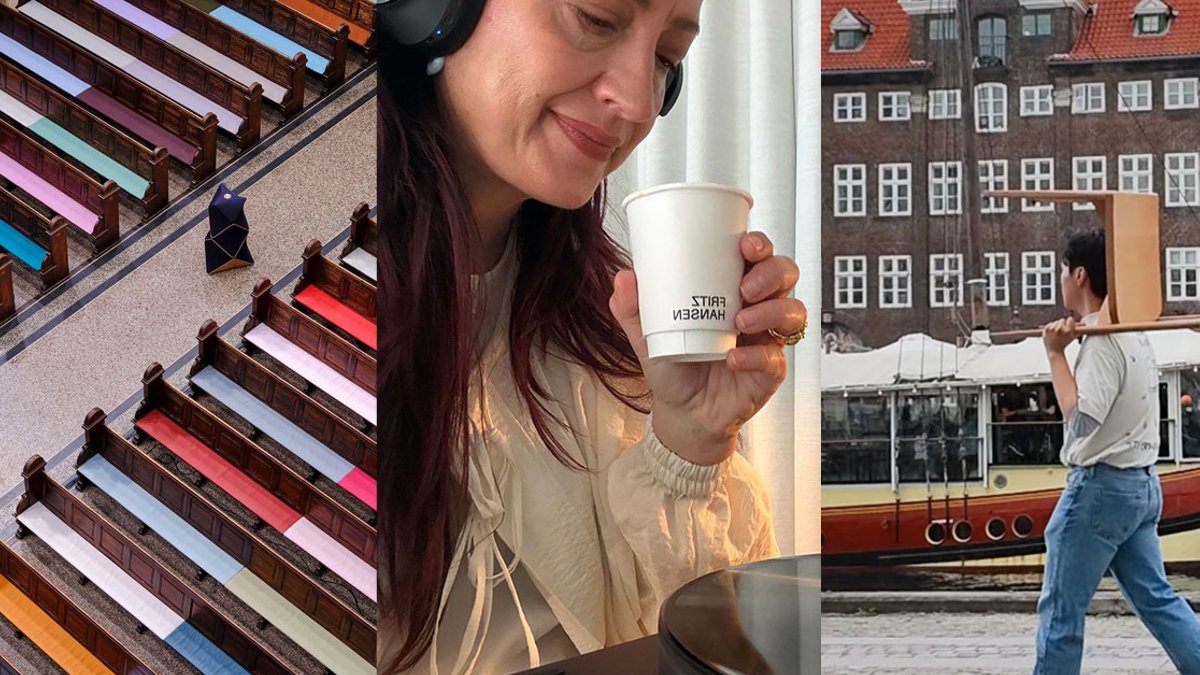
Copenhagen’s 3 Days of Design 2026 was a celebration of Scandinavian design, with a focus on craftsmanship, innovation, and community. The event featured a range of exhibitions, installations, and activations, showcasing the work of local and international designers.
Design Highlights
Mesura’s conversation pit for Vipp, accessed by a swimming pool ladder, was a playful highlight of the event. Royal Copenhagen’s revival of the historic Triton dinnerware collection, originally created in 1976 by Arje Griegst, was also notable. The collection’s avant-garde design and craftsmanship showcased the city’s rich design heritage.
Tekla’s exploration of Scandinavian patchwork quilts and traditional 19th-century Swedish box beds at Charlottenborg Palace was another standout. The exhibition showcased the history and craftsmanship of these traditional designs, highlighting their relevance in modern times.
Project Materia x Mater
Project Materia x Mater was one of the headline exhibitions this year. Founded by Tableau and Edition Solenne, Project Materia challenged nine international artists to design sculptural objects using a single circular material, made from Matek, a proprietary composite developed by Danish brand Mater. Matek contains upcycled waste streams, including discarded coffee shells, sawdust, and recycled plastic.
Related: Turin office bar designed by Fabio Fantolino
Other notable exhibitions included ‘The heart of living’ by Tekla at Charlottenborg Palace, ‘At the Threshold of Rest’ by Danish bedding brand Rye, and Mutina’s debut in Copenhagen, hosted at the HQ of Stockholm-based Note Design Studio.
Ukurant highlighted experimental work from emerging designers, students, and recent graduates who are rethinking craft, materials, and production through furniture, spatial ideas, and objects. The show was curated by Ukurant’s founders and stemmed from an open call aiming to raise young, fresh voices in the industry.
Objects of desire, curated by Birgitte Due Madsen, inside the Thorvaldsens Museum, was another exhibition that caught attention. Alpi Piazza Interiore, a site-specific installation by GamFratesi for Alpi, was inspired by the metaphysical paintings of Giorgio de Chirico.
Curated by Kasper Salto, Frederik Gustav, Michael Antrobus, and Jonas Trampedach, Vaerktoej 03 celebrated the sewing machine as the bridge between industrial production and handicraft. The show featured a stellar lineup of designers like Erwan Bouroullec, Pearson Lloyd, Support + Partners, among others.
Crude at Other Circle, a project by Charles Boy and Sofie Winther, explored the role of The Dining Chair in domestic politics. Studio Booboon’s handcrafted furniture and lighting pieces transformed off-cuts and surplus materials into meticulously constructed objects. Karl Monies’ ongoing lamp series, Bonum Lumen, at Other Circle, was also on display.
Related: Power strip red light explained simply
At Other Circle, sculptures by Magnus Pettersen merged conceptual ideas with the raw, tactile qualities of materials. Knife, Fork, Spoon 3.0 by Marta with Dung Ngo featured 3D-printed pieces that couldn’t be produced by conventional methods.
Iittala’s Aalto 90 Pavilion was a 7-meter-tall walk-in installation that marked the 90th anniversary of the Alvar Aalto vase. Designed by Tableau and engineered by aluminium producer Hydro, the pavilion recreated the icon’s fluid, organic contours on an architectural scale.
Max Lamb’s ‘Economy Chair’ has been put into production for the first time by Hem. Named Min, the chair is made from a single length of solid pine timber using the fewest number of cuts. At Deoron, 808 side table was a sculptural, blossom-like piece, a collaborative design by cousins and Belgian designers Jord Lindelauf and Lindert Steegen.
This was my second consecutive time at 3 Days of Design. The event showcased the city’s rich design heritage, with its unique blend of tradition, innovation, and community.

Leave a Reply