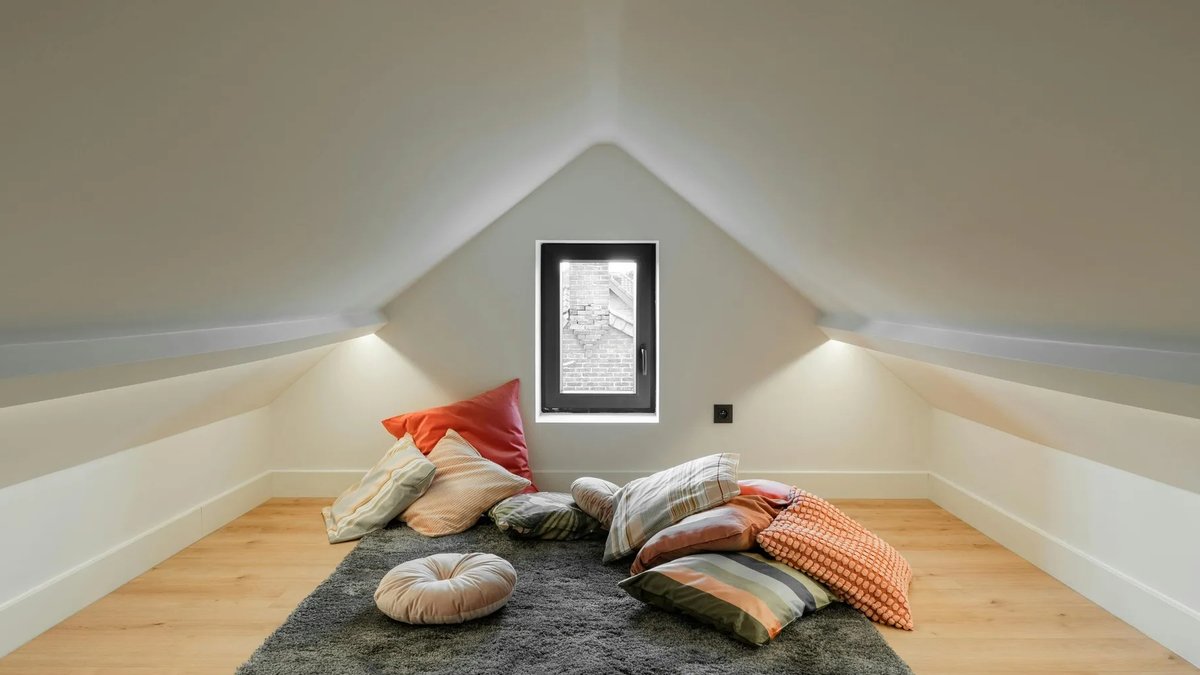
House and Garden reports that small spaces often appear cramped because homeowners fill them with too much furniture, creating a cluttered appearance that worsens the sense of confinement. A more effective strategy involves selecting essential pieces that serve multiple functions, such as a storage ottoman or a foldable desk. These items maintain an open feel while addressing practical requirements.
Vertical space is frequently ignored, leaving walls underutilized. Installing tall shelves or hanging artwork at eye level directs attention upward, enhancing the perception of height. Vertical storage solutions also free up floor area, contributing to a more spacious atmosphere. Even a basic ladder shelf can transform a compact bedroom or living room by maximizing unused wall space.
Dark colors introduce depth but can make small rooms feel confined. Light tones, including soft whites, pale greys, or pastels, reflect more natural light, creating a brighter and more open environment. If darker shades are necessary, they should be limited to accent walls or small decorative items. The objective is to avoid visual heaviness that diminishes the room’s perceived size.
Lighting has a significant impact on small spaces, often more than many realize. Heavy curtains block sunlight, whereas layered lighting, combining ambient, task, and accent sources, helps define zones without overwhelming the area. Strategically placed mirrors opposite windows amplify light, expanding the sense of space. A well-positioned floor lamp can illuminate a corner efficiently without occupying valuable floor area.
Oversized furniture dominates small rooms, restricting movement and comfort. Slender sofas, narrow bookshelves, and modular arrangements that can be reconfigured suit tight layouts better. A 60-inch-wide sofa in a 10×12-foot living room creates a cramped feel, whereas a 54-inch model allows for easier circulation and breathing room. In compact spaces, proportionality takes precedence over aesthetic preferences.
Small rooms often serve multiple purposes, such as a kitchen that also functions as a dining area. The solution does not always require larger furniture but instead involves thoughtful design. A foldable table that retracts when unused keeps the space uncluttered. Wall-mounted desks or drop-leaf tables conserve floor space while providing necessary functionality. The focus should be on practical use rather than purely visual appeal.
Minimalism can become impersonal if it eliminates all decorative elements. Thoughtfully selected items, like a single striking artwork or a textured throw pillow, add warmth without contributing to clutter. The principle is balance: maintain clear surfaces while incorporating elements that reflect personal style. A well-designed small space should feel intentional rather than sparse.





Leave a Reply