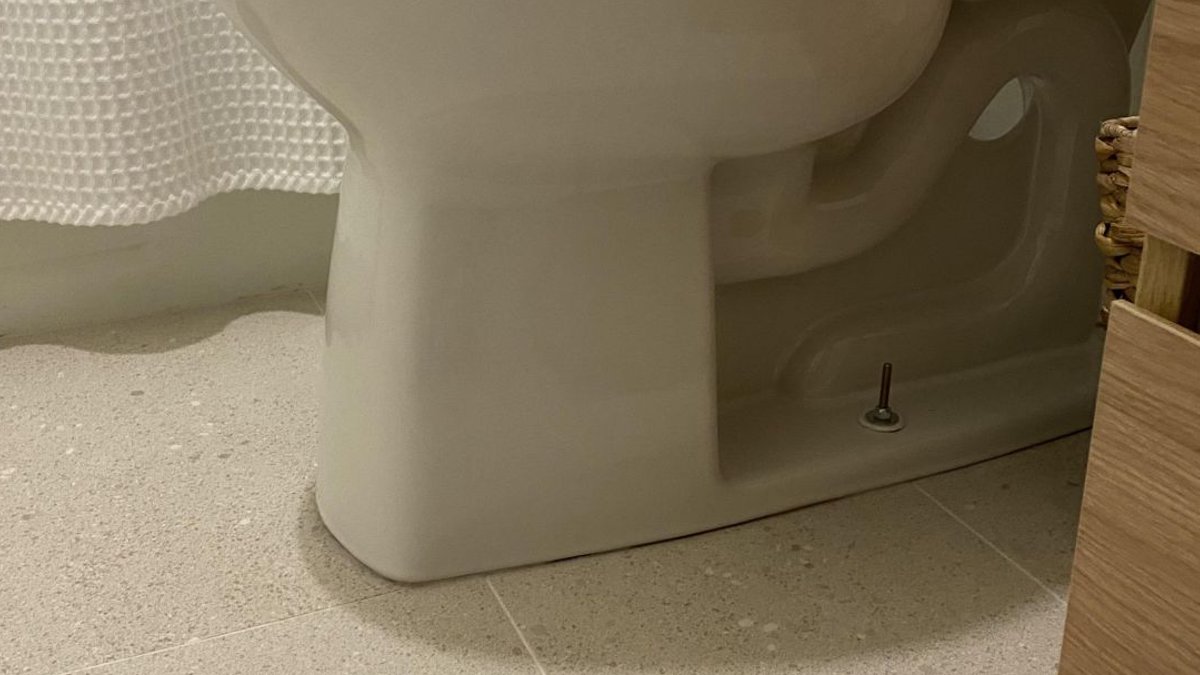
A sealant bead along the base of a toilet may appear incomplete when it ends before the back side, but this break could be intentional rather than an oversight.
A Reddit discussion started when one user installed a new toilet on a fresh tile floor and questioned whether the entire base should be sealed. The conversation revealed something most homeowners likely overlook: certain plumbers intentionally seal the visible edges while leaving the rear open.
How the uncovered area helps detect hidden leaks
The visible caulk around a toilet base does not serve as the watertight barrier preventing leaks into the drainage system. That critical seal lies beneath the fixture itself, connecting the toilet to the floor flange and holding back water flow.
When that concealed seal deteriorates, moisture accumulates underneath the unit. By keeping the backside unsealed, any leaking liquid finds a clear pathway to escape where it becomes visible to occupants before it spreads unnoticed across flooring materials.
One participant recounted a service call where water damage appeared through an apartment ceiling from the unit above. Because the toilet’s base had been completely sealed, the problem went undetected until significant structural harm occurred.
Read Also: Designers blend texture and light for serene modern bedrooms
In another case, a homeowner observed dampness forming near a newly placed toilet and initially suspected condensation from nearby showers. Shortly afterward, water began surfacing on the floor.
Maintaining an open space at the back doesn’t eliminate potential leaks—it simply offers a visible exit point for water originating beneath the appliance.
Why sealing the front and sides matters for cleanliness
While leaving part of the base open aids leak detection, fully exposing the entire perimeter introduces other complications.
The slim space between ceramic surfaces and flooring tends to trap liquids like mop residue, splashed shower water, pet hair, dust particles, and even bodily fluids. Once these substances settle under the toilet, removing them without lifting the entire fixture becomes nearly impossible.
A professional plumber mentioned during inspections regularly discovered accumulated filth under toilets whose bases were entirely unsealed. Another contributor emphasized that sealing off access points makes routine maintenance easier since contaminants cannot migrate into hard-to-reach spaces.
Read Also: Karoo Garden Thrives by Emulating Native Environment’s Resilience
These contrasting needs justify treating different sections distinctly. Visible areas receive sealing material to block external intrusion, whereas the concealed rear remains open to channel internal seepage outward.
The uncaulked section often goes unnoticed
Various methods suggest closing off the front and side portions while terminating near the back edge. Some leave roughly one to two inches exposed; others prefer wider gaps. Regardless of size, both strategies prioritize partial enclosure over complete isolation to avoid masking future problems entirely.
Protecting against bathroom runoff and accumulating waste entering the void beneath the fixture ranks among several compelling reasons plumbers recommend sealing. Additionally, local building codes frequently require securing all floor-mounted plumbing fixtures according to specific standards depending on jurisdiction.
However, not every expert agrees on best practices. Some advocate for leaving the base completely unsealed to ensure immediate visibility of any developing issues. Others insist that fully sealing the base represents standard industry protocol regardless of circumstances.





Leave a Reply